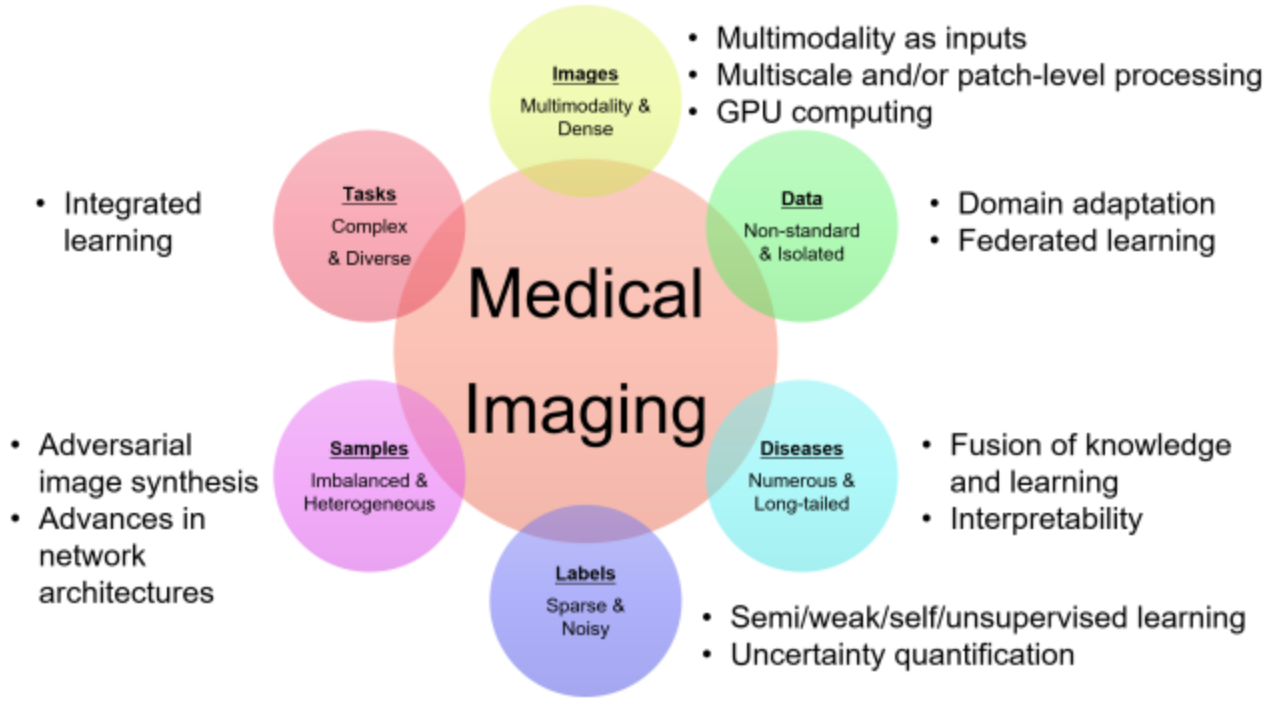
Ustc suzhou higher institute professor shao-hua zhou group, 2021 in the different direction of innovation in the field of medical image analysis have made important progress, according to a series of pain points in the applications of computer + imaging problems, such as cross modal registration, low dose CT reconstruction, sparse view some annotation data sets knowledge fusion, COVID - 19 unsupervised segmentation, etc., put forward innovative algorithm, The findings have been published in the leading journal of medical imaging analysis. In collaboration with world-renowned medical image analysis scholars, we jointly wrote the latest review article published in Proceedings of IEEE, introducing the research progress of deep learning in the area of medical image analysis. For the first time in the field of orthopedic imaging, large-scale data sets of pelvic segmentation (CTPelvic1K) and spinal segmentation (CTSpine1K) were published, which greatly promoted and led the development of the community.
· Open source work:
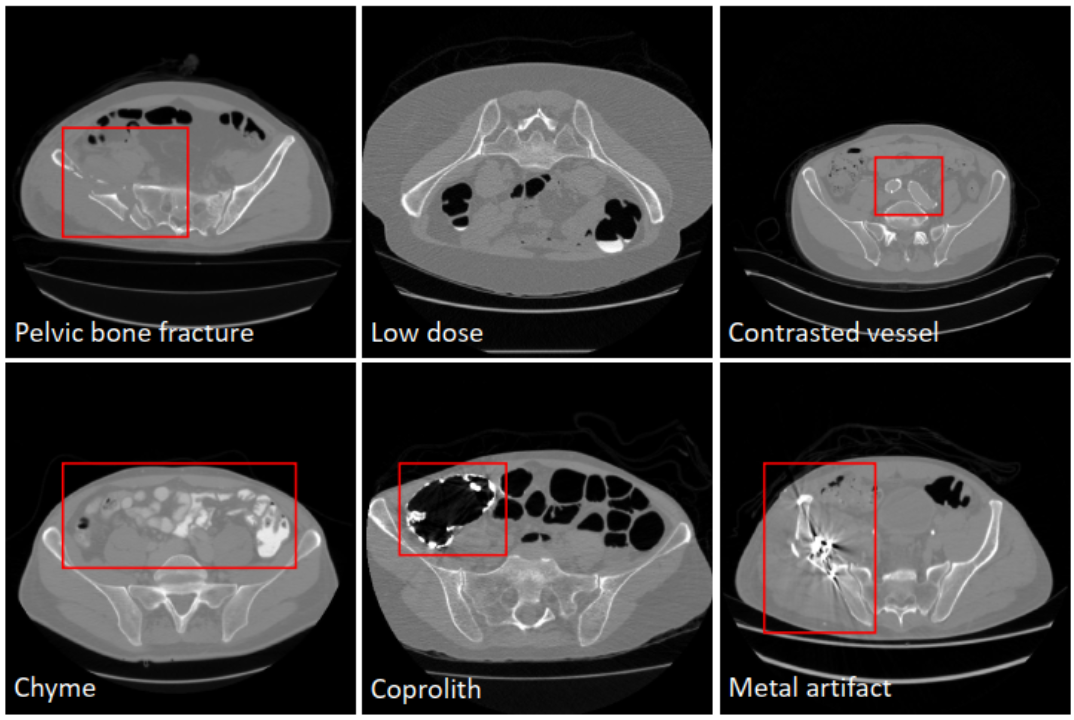
1 CTPELVIC1K pelvis segmentation dataset (https://github.com/ICT-MIRACLE-lab/CTPelvic1K)
The first open source large-scale segmentation data set of pelvic anatomy, including 1184 3D CT pelvic data, segmentation labels, and baseline models. Cooperative unit: Jishuitan Hospital.
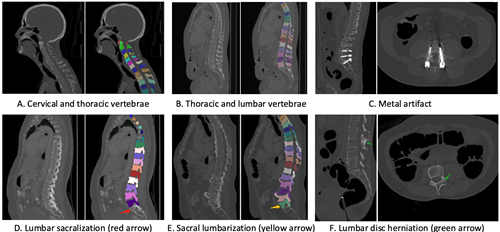
2 CTSPINE1K spinal segmentation dataset (https://github.com/ICT-MIRACLE-lab/CTSpine1K)
The first open source large-scale spinal segmentation dataset, containing 1005 3D CT spinal data, 24 conical segmentation labels, and baseline models. Cooperative unit: Jishuitan Hospital.
Papers published:
Article 1: S. Kevin Zhou, H. Greenspan, C. Davatzikos, J.S. Duncan, B. van Ginneken, A. Madabhushi, J.L. Prince, D. Rueckert, And R.M. Summers, "A Review of Deep Learning in Medical Imaging: Imaging traits, technology trends, case studies with progress highlights, And Future Promises, "Proceedings of the IEEE, 2021.
Link: https://ieeexplore.ieee.org/document/9363915
This article introduces the characteristics of medical imaging, highlights the clinical needs and technical challenges of medical imaging, and describes how the emerging trend of deep learning can address these issues. The paper covers topics such as network structure, sparse and noisy labeling, federated learning, interpretability, quantification of uncertainty, and future research directions. It also includes a number of case studies that are common in clinical practice, including digital pathology as well as chest, brain, cardiovascular, and abdominal imaging.